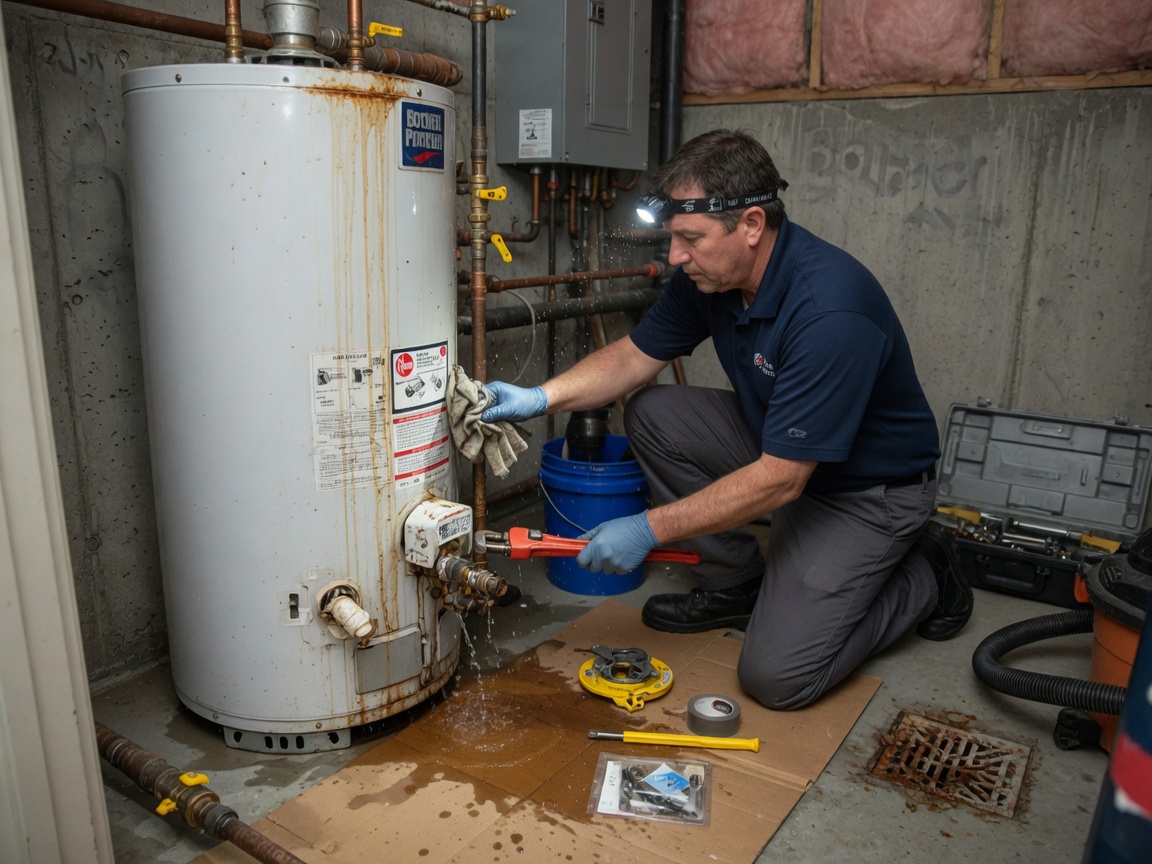
Bothell's mild wet winters drive condensation on tanks and fittings in older Westhill and Maywood homes, where galvanized supply lines from the 1970s and 1980s often corrode at the unions. Technicians see leaks start as slow drips at the cold inlet or T&P valve after heavy November rain saturates crawlspaces. Access under 212th Street homes is frequently tight, requiring removal of insulation and floor joist work before any repair can begin.
North Creek and areas near UW Bothell Campus have more 1990s tract homes with plastic piping that fails at the dielectric unions when sediment builds up from the Cedar River supply. A common edge case is a pinhole leak on the hot outlet that only shows after the unit has run for twenty minutes. Code in King County requires a new expansion tank and proper seismic strapping on any replacement, even for repair jobs that turn into swaps.
Summer dry spells mask issues until the first fall rains, when temperature swings cause metal tanks to expand and reopen old solder joints. Homeowners in Kenmore and Woodinville often mistake ceiling stains for roof leaks when the water heater sits in an upstairs closet. Proper diagnosis includes checking the anode rod condition and flushing sediment that accelerates corrosion in local hard-water pockets.
Technician insight
In Bothell the thing that catches most people out with water heater leak repair is older Westhill homes where the tank sits on a dirt floor; once the bottom starts weeping, the soil keeps the leak hidden until it reaches the joists, and by then you are usually replacing the whole unit rather than patching a fitting.
North Creek Tank Leak
Homeowner noticed damp carpet near the utility closet after three days of rain. Inspection found a pinhole on the lower seam of a 14-year-old tank. The unit was replaced same day with a new 50-gallon model, new expansion tank, and updated strapping to meet current King County requirements.
Water Heater Leak Repair Services We Offer
✓Tank Leak Detection
Pressure testing and moisture meter inspection to locate pinholes in the tank before drywall or flooring is removed in Bothell crawlspaces.
✓T&P Valve Replacement
Swap of leaking temperature and pressure relief valves with code-compliant units rated for King County water pressure.
✓Inlet and Outlet Fitting Repair
Re-sealing or replacing corroded dielectric unions and flex lines that fail in older Westhill and Maywood homes.
✓Anode Rod Inspection and Replacement
Pulling and replacing depleted anode rods to stop internal corrosion that leads to tank leaks in North Creek homes.
✓Sediment Flush and Leak Prevention
Flushing mineral buildup from the tank bottom to reduce stress on seams and fittings during wet winter months.
Water Heater Leak Repair Cost in Bothell, WA
| Service | Typical Range | What Affects It |
|---|---|---|
| T&P Valve Replacement | $225–$375 | Higher when valve is in a tight closet or requires pipe soldering. |
| Fitting and Union Repair | $275–$450 | Varies with pipe material and number of connections that need reworking. |
| Anode Rod Replacement | $175–$325 | Includes flush; tank age and rod condition affect total time. |
| Tank Replacement After Leak | $1,400–$2,200 | Includes haul away, new permits, and seismic strapping required in King County. |
Ranges are typical for Bothell, WA and confirmed with an exact written quote before any work starts.
How it works
- 1
On-Site Assessment
Arrive during posted hours, shut off water and power or gas, then check for active leaks around the tank, valves and connections.
- 2
Source Identification
Use moisture meters and pressure tests to pinpoint whether the leak is from the tank, T&P valve, or supply fittings common in Bothell homes.
- 3
Repair Execution
Replace the failed component or recommend tank replacement when corrosion has compromised the vessel, following King County permitting rules.
- 4
System Verification
Refill, check for new drips after a full heat cycle, and confirm seismic strapping and expansion tank are in place before leaving.
Pricing
Upfront quotes given on site; final cost depends on whether the tank must be replaced and access conditions in the home.