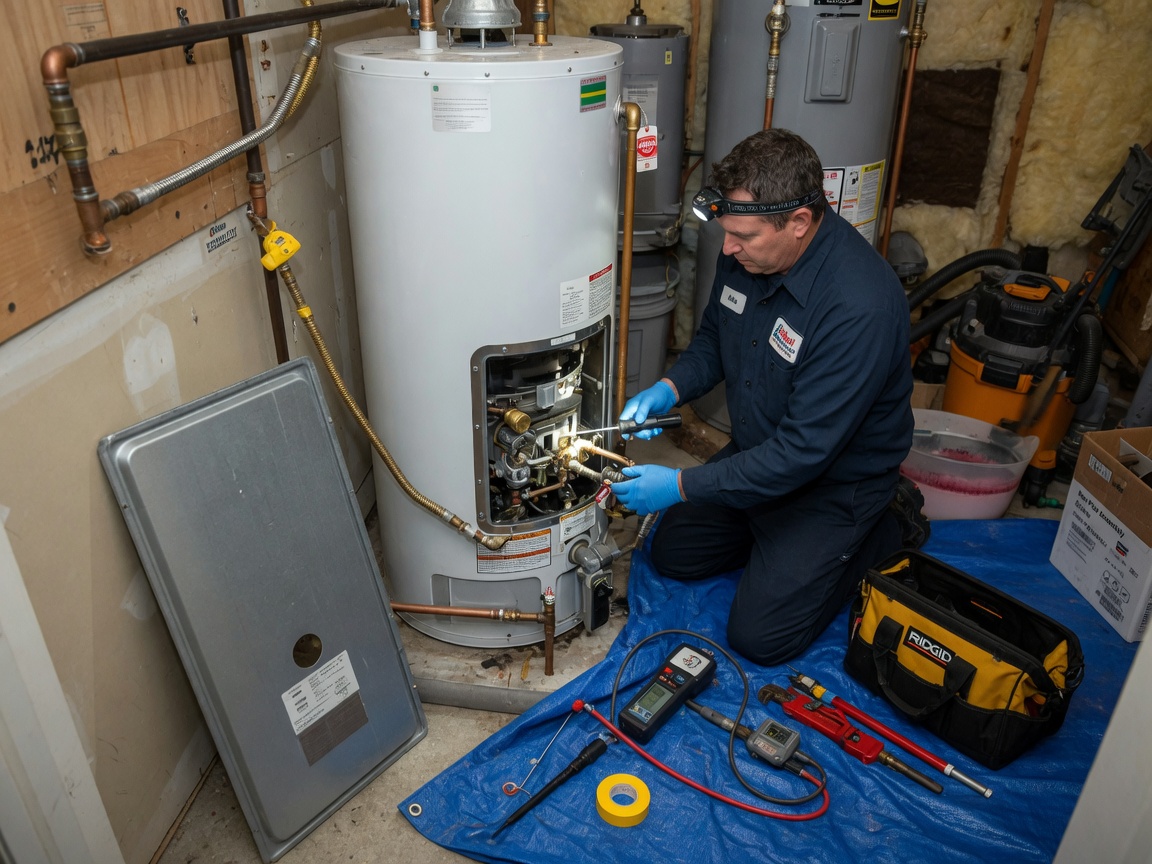
Bothell Water Heater Pros handles water heater repair calls throughout Thrasher's Corner, where many homes sit along 212th Street Southwest and side streets like 35th Avenue Southeast. These properties often feature 1970s to 1990s construction with original tanks that develop leaks from sediment buildup during the long wet winters common in King County. Our trucks reach driveways directly off 212th without alley complications, letting us isolate leaks and restore hot water the same day.
The neighborhood's mix of single-story ranches and split-levels near North Creek means some units sit lower on lots where drainage stays damp most of the year. That moisture accelerates corrosion on older gas and electric models, especially when homeowners run systems hard through the mild but rainy season. We stock common parts for the brands installed here and complete most leak repairs without removing the whole unit.
Residents in Thrasher's Corner also call for help after summer dry spells when water pressure spikes and stresses older supply lines. We focus on the actual failure point rather than full replacement unless the tank shows widespread rust. Service stays within the posted hours: Monday through Friday 8am to 6pm and Saturday 9am to 2pm from our base at 429 212th St SW.
Around Thrasher's Corner
We regularly work near:
- 📍212th Street Southwest
- 📍North Creek Forest
- 📍Canyon Park
- 📍35th Avenue Southeast
Water Heater Repair in Thrasher's Corner — Local Notes
- •Wet winters increase sediment in tanks because residents use more hot water during long stretches of rain, shortening element life on electric units common in Thrasher's Corner split-levels.
- •Larger lots off 212th Street Southwest usually allow van access right to the garage or side door, reducing the need to carry parts across yards or stairs.
- •Homes closer to North Creek sit on soil that holds moisture, so basement water heaters see faster external rust on the lower third of the tank compared with higher lots near Canyon Park.
- •Many 1980s homes here still have 40-gallon tanks that now serve larger households, pushing units past their design life and creating slow leaks at the anode rod threads.